Artist Spotlight & Signature Prototypes, Boutique Electronics & Tone Shaping, Custom Guitar Atelier Design, Custom Guitars, Customer Reviews, International Shipping & Global Logistics, Style, The Bespoke Build Process (E-E-A-T), Tonewood & Material Science
Why Do Similar-Looking Electric Guitars Have Such Different Prices?
Nov
Understanding the Real Value of Premium Tonewoods, Quality Hardware, Chambered Body Construction, and Custom Guitar Craftsmanship
Have you ever discovered two electric guitars that look almost identical, yet one costs approximately $300–$400 while the other is considerably more expensive?
At first glance, both instruments may feature the same body shape, finish, pickup arrangement, and general appearance.
This naturally raises an important question:
Why should you pay more for a custom guitar when a similar-looking instrument is available online for a fraction of the price?
At Custom Guitar Atelier, we believe customers deserve a clear explanation of what goes into the construction of their instruments.
The difference between two guitars is not always visible in photographs. It can be found in the wood beneath the finish, the quality of the hardware, the electronic components, the selected construction methods, and the attention given to the final setup.
In this guide, we answer some of the most common questions musicians ask before investing in a custom-built electric guitar.
1. Why Do Some Electric Guitars Cost $300–$400 While Others Cost Much More?
The price of an electric guitar is influenced by several factors, including its materials, manufacturing process, hardware, electronics, customization requirements, and quality control.
Two guitars may share a similar external appearance while having substantially different internal specifications.
Some lower-priced instruments achieve their selling prices through standardized production, economical materials, simpler component configurations, and higher manufacturing volumes.
These approaches can produce affordable and enjoyable instruments. However, they do not necessarily provide the same options or specifications offered by a custom guitar builder.
At Custom Guitar Atelier, we focus on carefully selected materials, dependable components, and individual construction requirements.
Our customers also have the opportunity to personalize their instruments according to their preferred playing style, appearance, and hardware configuration.
The important question is not simply how much a guitar costs, but what materials, components, construction methods, and workmanship are included in that price.
2. Are Custom Guitars Different From Similar-Looking Guitars on eBay or AliExpress?
Yes, custom-built guitars can differ significantly from visually similar instruments available through online marketplaces.
However, it is important to understand that not every guitar sold on eBay or AliExpress has the same quality or specifications.
Some sellers offer basic production models, while others advertise instruments with upgraded hardware, specialized finishes, or custom construction.
The best way to make a meaningful comparison is to examine the actual specifications.
For example, consider two guitars that share the same body design.
One may feature an economical body wood, generic tuning machines, basic pickups, and standard electronic components.
Another may incorporate premium imported tonewoods, Wilkinson hardware, genuine decorative inlays, selected potentiometers, and a customized body construction.
Although the instruments may look similar in photographs, their materials, setup requirements, adjustment capabilities, and overall playing characteristics can differ.
At Custom Guitar Atelier, we believe these details deserve careful consideration before purchasing an instrument.
3. Why Are Premium Tonewoods Important in Custom Guitar Construction?
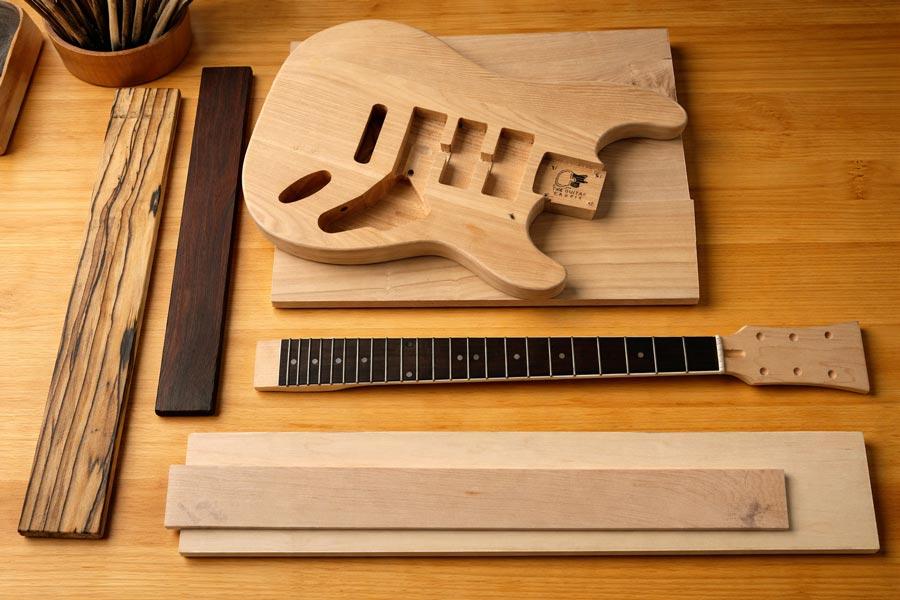
The body, neck, and fretboard are fundamental structural components of an electric guitar.
Their selection influences the instrument’s weight, balance, appearance, structural stability, and playing feel.
At Custom Guitar Atelier, we use carefully selected premium tonewoods, including materials sourced from Japan for our custom guitar configurations.
Depending on the selected model and customer requirements, available woods may include mahogany, maple, rosewood, ebony, and other suitable varieties.
Body Wood
The body wood contributes to the instrument’s weight, balance, mechanical resonance, and overall construction.
For example, mahogany is frequently selected for its appearance, workability, and established use in electric guitar construction.
The quality, moisture condition, and preparation of the wood are important considerations during manufacturing.
Neck Wood
The neck is particularly important because it must support string tension while maintaining an appropriate playing profile.
Maple is a common choice for custom guitar necks because of its strength, stiffness, and suitability for precision woodworking.
A properly constructed neck contributes to reliable setup adjustments and comfortable playability.
Fretboard Wood
The fretboard affects the player’s tactile experience, appearance, and maintenance preferences.
Rosewood and ebony are popular options because of their distinctive appearance and established use in instrument construction.
The condition of the wood, fret installation, fret leveling, and overall workmanship all contribute to the finished playing experience.
Does More Expensive Wood Automatically Produce Better Tone?
Not necessarily.
Electric guitar tone depends on several interacting factors, particularly the pickups, electronics, strings, construction, amplifier, and playing technique.
Premium wood should not be judged solely by its price.
Its suitability, preparation, stability, construction quality, and the guitarist’s preferences are equally important.
Our objective is to select appropriate materials that support the complete instrument rather than rely on appearance alone.
4. Why Do Guitar Hardware and Electronic Components Matter?
Hardware and electronics are among the most important practical considerations when comparing guitars.
These components contribute directly to tuning performance, string adjustment, electrical functionality, and reliability.
For the Custom Parallax Model 1 and other compatible builds, Custom Guitar Atelier offers component configurations that may include:
| Component | Available Premium Configuration |
|---|---|
| Tuning Machines | Wilkinson |
| Pickups | Wilkinson |
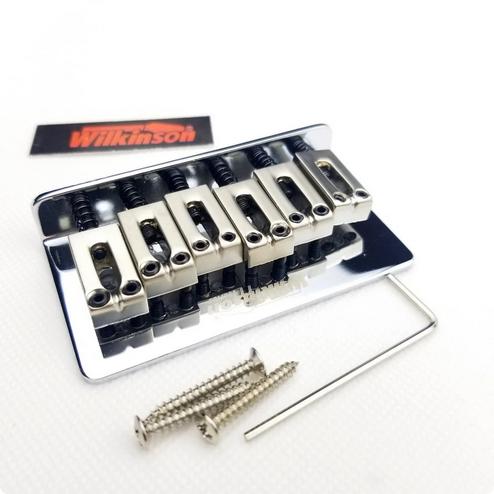
| Bridge | Wilkinson |
| Potentiometers | Alpha |
| Nut | Graphite |
| Fretboard Inlays | Genuine Abalone |
| Strings | D’Addario USA |
| Tonewoods | Selected premium imported woods |
Depending on the model, customers may also select alternative hardware, electronics, and materials.
Wilkinson Tuning Machines
Tuning machines are responsible for adjusting and maintaining string tension.
Precision, gear operation, proper installation, and component quality contribute to smooth tuning adjustments and dependable performance.
Wilkinson Pickups
Pickups are a major factor in an electric guitar’s amplified sound.
Different pickup designs produce different electrical responses and tonal characteristics.
Wilkinson pickups offer configurations suited to a variety of musical styles and playing preferences.
Wilkinson Bridges
The bridge influences string positioning, intonation adjustment, and the guitar’s overall setup.
Bridge selection should account for string spacing, construction type, and the player’s preferred techniques.
Alpha Potentiometers
Potentiometers control important electronic functions such as volume and tone.
Reliable electronic components and properly executed wiring help deliver consistent control and functionality.
Graphite Nut
A properly fitted graphite nut can help provide smooth string movement at the nut slots, which may contribute to tuning stability.
Correct nut slot dimensions and installation remain essential regardless of material.
Genuine Abalone Fretboard Inlays
Genuine abalone offers distinctive natural color variations and an elegant decorative appearance.
Precision inlay work requires attention to fitting, alignment, and finishing.
A guitar’s hardware and electronics deserve the same consideration as its external appearance.
5. What Is Chambered Solid Wood Body Construction?
One of the customization options available for selected Custom Guitar Atelier models is Chambered Solid Wood Body Construction.
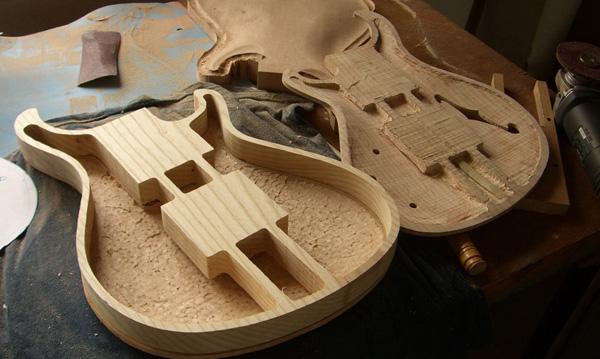
A chambered guitar begins with a solid wood body, but carefully planned internal sections of wood are removed to create enclosed chambers.
These chambers are incorporated into the construction while maintaining the instrument’s external body shape.
This allows customers to enjoy a familiar solid-body appearance with different internal structural characteristics.
What Are the Advantages of a Chambered Guitar?
Reduced Body Weight
One of the most practical benefits is the potential to reduce the instrument’s weight.
For musicians who perform long concerts or rehearsals, a lighter guitar may provide greater comfort.
Improved Playing Comfort
Reducing body weight can help make an instrument more manageable during extended standing performances.
The actual benefit depends on the overall weight, body balance, strap position, and player’s preferences.
Different Resonance Characteristics
Internal chambering changes the mechanical properties of the guitar body.
These changes may influence how the instrument vibrates and how the player experiences its acoustic response.
Customizable Construction
Chambering provides another way to tailor the instrument to individual requirements without necessarily changing its external appearance.
Does Chambered Construction Automatically Improve Guitar Tone?
No.
Chambered construction can influence the body’s resonance, but it does not automatically produce a better amplified tone than solid-body construction.
The final sound depends on the complete instrument, including pickups, electronics, strings, hardware, setup, and amplification.
The main advantage is the freedom to choose a body construction that suits your preferred weight, playing comfort, and response.
6. Solid Wood vs. Chambered Solid Wood: Which Should You Choose?
Both construction methods can produce excellent electric guitars.
| Feature | Solid Wood Body | Chambered Solid Wood Body |
|---|---|---|
| Internal construction | Solid wood structure | Selected internal chambers |
| Weight | Depends on wood and design | Often lighter than a comparable solid body |
| Appearance | Traditional solid-body design | Can retain the same external design |
| Resonance | Characteristic solid-body response | May provide a different mechanical response |
| Customization | Wood selection and shaping | Wood selection plus chamber design |
| Ideal consideration | Traditional construction preference | Weight reduction and playing comfort |
For guitarists who prefer traditional solid-body construction, a solid wood body may be the most suitable option.
For musicians concerned about instrument weight or interested in different resonance characteristics, chambered solid wood construction may be worth considering.
At Custom Guitar Atelier, our custom-building approach allows customers to select their preferred body construction on compatible models.
7. Can a Lower-Priced Guitar Be Built With Similar Materials?
It is possible to produce a visually similar guitar using less expensive woods, hardware, and electronics.
However, the decision to use lower-cost components should be considered carefully.
Our production approach places emphasis on component suitability, dependable performance, and construction quality.
For example, inexpensive tuning machines may perform adequately, but manufacturing tolerances, gear quality, and installation can influence tuning operation.
Similarly, electronic components may differ in their specifications, consistency, and long-term performance.
This does not mean every inexpensive component is unreliable.
Rather, the overall quality of an instrument should be evaluated through its specifications and construction, not its appearance or price alone.
At Custom Guitar Atelier, we prefer to maintain our established material and component standards rather than reduce specifications solely to reach the lowest possible selling price.
8. Do Custom Guitars Last Longer? A Customer’s Experience Since 2014
A well-built instrument can provide many years of musical enjoyment when it is properly maintained.
Its long-term performance depends on construction quality, hardware, storage conditions, maintenance, and how the instrument is used.
One meaningful example from our own customer community is Daniel John Pepin.
Daniel purchased two custom guitars from our company in 2014 and has continued playing his instruments over the years.
He has also shared videos featuring his guitars:
Daniel Pepin – Guitar Video 1
Daniel Pepin – Guitar Video 2
Daniel later shared the following feedback:
“You guys built this and it still plays great after years of hard rocking!”
— Daniel John Pepin
You can view his original Facebook comment here:
View Daniel John Pepin’s Facebook Testimonial
Customer experiences like Daniel’s are especially meaningful because they provide insight into how an instrument performs after years of actual use.
While individual testimonials cannot guarantee the lifespan of every guitar, they offer a valuable perspective on long-term ownership and customer satisfaction.
We sincerely appreciate Daniel’s continued support and his willingness to share his experience.
9. What Makes Custom Guitar Atelier Different?
At Custom Guitar Atelier, customization extends beyond selecting a body color or changing the appearance of an instrument.
Customers can explore a wide range of available specifications, including:
- Body Core Wood: Select from available premium wood varieties.
- Body Construction: Choose solid wood or chambered solid wood on compatible models.
- Neck Wood: Customize the neck material according to the design.
- Fretboard Wood: Select your preferred material and appearance.
- Tuning Machines: Choose available hardware brands and configurations.
- Pickups: Select from compatible pickup options.
- Bridge: Choose the bridge system that suits your playing style.
- Nut Material: Select compatible materials, including graphite or bone.
- Potentiometers: Choose available electronic component options.
- Fretboard Inlays: Personalize the appearance with available materials and designs.
Our Production Team and Master Guitar Luthier work from the customer’s confirmed specifications throughout the construction process.
Each instrument progresses through woodworking, construction, finishing, hardware and electronics installation, final setup, and quality checks.
Our goal is to create instruments that reflect each customer’s individual preferences while maintaining our standards for craftsmanship and performance.
10. A Closer Look at the Custom Parallax Model 1
For musicians interested in a distinctive custom guitar design, our Custom Parallax Model 1 Natural Flamed Maple Top Electric Guitar provides an excellent example of the customization options available through Custom Guitar Atelier.
The instrument features a distinctive body design and offers selections for premium tonewoods, construction methods, hardware, electronics, and other components.
Customers can explore these options directly on the product page.
Explore the Custom Parallax Model 1 Natural Flamed Maple Top Electric Guitar
Whether you prefer traditional solid wood construction or a chambered body, our aim is to help you choose an instrument that suits your playing requirements and personal preferences.
Frequently Asked Questions About Custom Guitar Quality and Pricing
Why do custom guitars cost more than inexpensive electric guitars?
Custom guitars can cost more because of selected materials, hardware, electronics, specialized construction, individual customization requirements, and the work involved in producing the instrument.
Are expensive guitars always better than cheap guitars?
No. Price alone does not determine quality. An instrument should be evaluated according to its materials, construction, hardware, setup, playability, and suitability for the musician.
Is a custom guitar worth the extra money?
A custom guitar may be worth the additional investment when the customer values specific construction details, premium components, personalized specifications, and an instrument built around individual preferences.
Are Wilkinson guitar pickups and hardware good?
Wilkinson offers a range of guitar pickups and hardware used in different electric guitar configurations. Performance depends on the specific components, compatibility, installation, and overall instrument setup.
What is the benefit of a chambered electric guitar body?
Chambering can reduce body weight, improve comfort for some players, and alter the instrument’s mechanical resonance while preserving its external design.
Does chambered construction provide more sustain?
Not necessarily. Sustain depends on multiple factors, including guitar construction, hardware, strings, fret condition, and setup. Chambering does not guarantee greater sustain.
Can I choose premium components for my Custom Guitar Atelier guitar?
Yes. Custom Guitar Atelier offers selectable tonewoods, hardware, pickups, electronics, and construction options depending on the guitar model.
Can I request a guitar with the same appearance but upgraded hardware?
Yes. Customers may discuss their preferred appearance and component specifications with our Custom Guitar Specialists. Available configurations depend on the selected design and customization options.
Final Thoughts: Look Beyond the Price Tag
When comparing two electric guitars that appear almost identical, the purchase price tells only part of the story.
The materials beneath the finish, the quality of the hardware, the electronic components, the construction method, and the workmanship all contribute to the finished instrument.
A lower-priced guitar may be a suitable choice for some musicians. For others, the additional flexibility and specifications of a custom-built instrument may provide greater value.
At Custom Guitar Atelier, our philosophy is straightforward:
Build an instrument around the musician’s requirements, using carefully selected materials and components, with attention to craftsmanship, quality, and performance.
We encourage customers to compare specifications carefully, ask questions, and select the configuration that best suits their musical needs.
Explore Your Custom Guitar Options
Discover the materials, hardware, electronics, and body construction options available through Custom Guitar Atelier.
Explore Our Custom Parallax Model 1
You can also read our Complete Guide to Designing a Custom Electric Guitar for additional guidance.
Have questions about your preferred instrument? Contact us at [email protected].
CUSTOM GUITAR ATELIER
Crafted for Your Hands. Built for Your Sound.
1. Premium tonewoods
2. Solid vs. chambered guitar body
3. Premium hardware and electronics