
Artist Spotlight & Signature Prototypes, Boutique Electronics & Tone Shaping, Custom Guitars
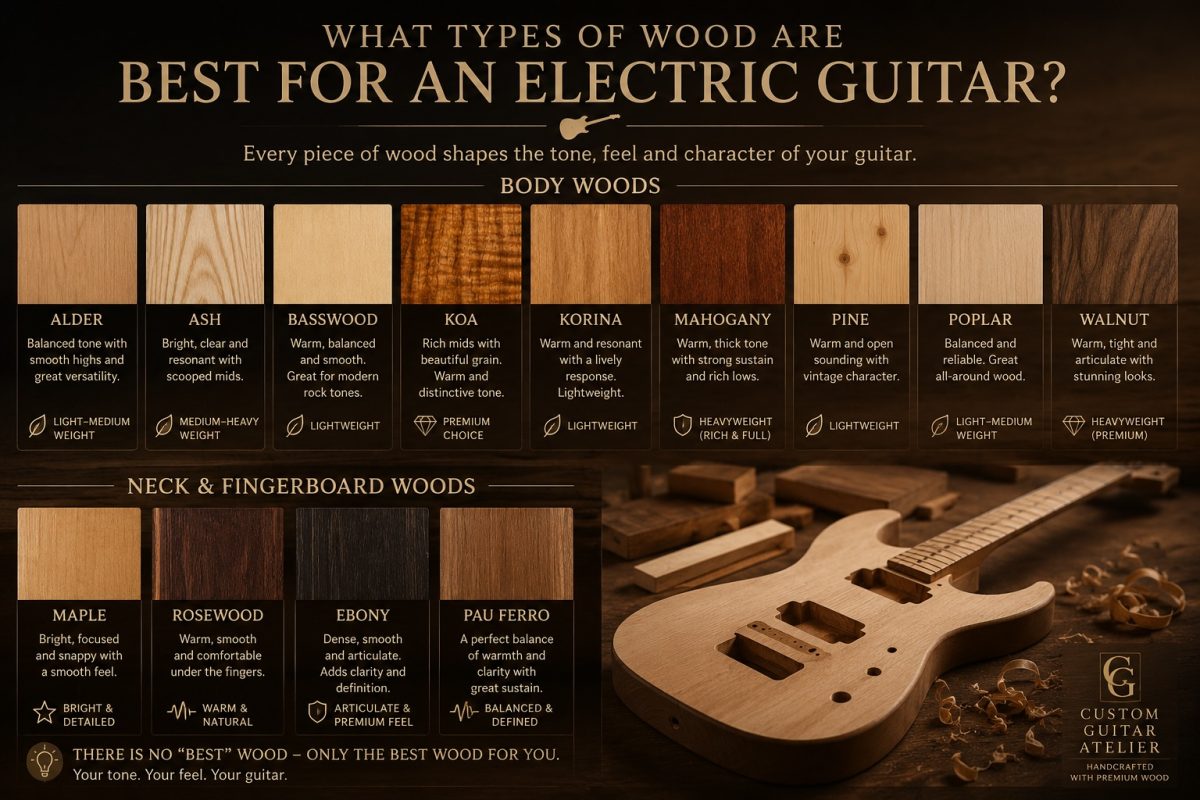
What Types of Wood Are Best for an Electric Guitar?
May
Choosing the best wood for an electric guitar is one of the most discussed topics among guitar players, builders, and tone enthusiasts. Some players believe that wood has only a small effect on the final sound of an electric guitar, especially when pickups, strings, bridge design, electronics, amplifier choice, and playing technique are also involved.
At Custom Guitar Atelier, we believe every part of a guitar contributes to its character. The pickups may capture the signal, but the wood forms the foundation of the instrument. It affects weight, sustain, resonance, balance, feel, and the overall response of the guitar in the player’s hands.
A well-built guitar is not just a collection of parts. It is a complete system where the body wood, neck wood, fingerboard, hardware, electronics, and craftsmanship all work together.
Why Tonewood Matters
Tonewood affects more than just sound. It also influences the way a guitar feels, responds, and sustains. Different woods can affect:
- Sustain and resonance
- Weight and comfort
- Brightness or warmth
- Midrange character
- Low-end response
- Attack and note definition
- Overall playing feel
There is no single “best” wood for every guitarist. The right choice depends on the sound, style, weight, appearance, and feel you want from your custom instrument.
Popular Woods for Electric Guitar Bodies
Alder
Alder is one of the most popular body woods for electric guitars. It is known for its balanced tone, moderate weight, and smooth frequency response. It works especially well with single-coil pickups because it provides clarity without making the high frequencies sound too sharp.
Alder usually has a simple grain pattern, which makes it a great choice for solid color finishes. It is a reliable all-around body wood for players who want a balanced and versatile sound.
Ash
Ash is another classic electric guitar body wood. It is known for strong resonance, clear highs, and a slightly scooped midrange. Swamp ash, in particular, is valued for its lighter weight and lively response.
Ash can deliver excellent clarity and definition, making it a favorite for blues, rock, country, and clean-toned playing. It also often has an attractive grain pattern, making it a strong choice for transparent or natural finishes.
Basswood
Basswood is lightweight, easy to work with, and widely used in modern electric guitars. It has a warm, balanced tone with a smooth top end and a strong midrange presence.
Because of its even response, basswood works very well with high-output pickups and tremolo-equipped guitars. It is often used in rock and shred-style instruments because it provides a comfortable weight and a controlled tone that pairs well with powerful electronics.
Koa
Koa is a beautiful and highly prized wood known for its striking grain and warm tonal character. It is more commonly used in acoustic guitars, but it can also be used in electric guitar construction, especially for tops or special custom builds.
Tonally, koa offers rich mids, warmth, and a slightly sweet response. Visually, it is one of the most elegant woods available, making it ideal for premium custom guitars.
Korina
Korina, also known as limba, is a lightweight and resonant wood often compared to mahogany. It has a warm, balanced tone with good sustain and a lively response.
Korina is popular for larger guitar body shapes because it can provide richness without excessive weight. It also has a distinctive appearance, making it a great option for players who want something classic but slightly different from the usual tonewood choices.
Mahogany
Mahogany is one of the most respected woods in electric guitar building. It is known for its warm, thick tone, strong sustain, and rich low-to-mid frequency response.
Many players love mahogany because it gives a guitar depth, fullness, and a powerful voice. It is often used for both bodies and necks. In premium builds, mahogany is commonly paired with a maple top to add brightness, definition, and visual beauty.
The main consideration with mahogany is weight. A solid mahogany guitar can be heavier than other options, but for many players, the sustain and tonal richness are worth it.
Pine
Pine was used in some early electric guitar designs and remains an interesting option for certain custom builds. It is a softer wood with a warm, open tone and a responsive feel.
Pine can produce a lively and vintage-inspired sound, especially for players who want a raw, organic, and traditional character from their guitar.
Poplar
Poplar is often used in affordable and mid-priced guitars, but it should not be dismissed. It has a balanced tone, moderate weight, and dependable workability.
It may not have the dramatic grain of ash, koa, or figured maple, but poplar is a practical and stable body wood. It is a good option for solid-color finishes and guitars designed for reliable everyday use.
Walnut
Walnut is a dense, beautiful wood with a tone that is often described as warm like mahogany but slightly brighter and tighter. It has excellent visual character and can produce a strong, articulate sound.
Because walnut can be heavy, it is less common for full solid-body guitars, but it works well in selected custom designs, tops, semi-hollow builds, and premium instruments where appearance and tonal personality are important.
Best Woods for Guitar Necks and Fingerboards
The fingerboard and neck also influence the feel, stability, and response of a guitar. While the body wood plays a major role in the instrument’s overall voice, the neck and fingerboard are just as important to the player’s experience because this is where the hands directly interact with the instrument.
Maple
Maple is a strong, dense, and durable wood commonly used for guitar necks and fingerboards. It has a bright, focused response and a smooth playing feel.
A maple fingerboard can be part of a one-piece maple neck or a separate board attached to the neck. It is a popular choice for players who want clarity, snap, and a clean, fast feel.
Rosewood
Rosewood is known for its warm tone, comfortable feel, and slightly porous texture. It has long been one of the most popular fingerboard woods because it feels natural under the fingers and provides a smooth playing experience.
Compared to maple, rosewood generally feels softer and warmer. Due to supply restrictions and sustainability concerns, many builders now also use alternatives such as laurel, pau ferro, ziricote, and other similar woods.
Ebony
Ebony is a dense, hard, and smooth fingerboard wood. It is valued for its sleek playing surface, elegant appearance, and articulate tonal response.
Ebony often adds brightness, definition, and a premium feel to a guitar. It is commonly used on high-end instruments and is especially appreciated by players who want a fast, refined fingerboard surface.
Pau Ferro
Pau ferro is often considered a middle ground between rosewood and ebony. It is harder and tighter-grained than rosewood, but not as glassy-feeling as ebony.
It offers clarity, sustain, and a smooth feel, making it a popular modern fingerboard choice. It is also widely used as a practical and attractive alternative to rosewood.
Choosing the Right Wood for Your Custom Guitar
The best wood for an electric guitar depends on the type of instrument you want to build. A player looking for warmth and sustain may prefer mahogany. Someone looking for clarity and balance may choose alder or ash. A modern player may enjoy the smooth midrange of basswood, while a player wanting a premium visual finish may choose koa, walnut, or figured maple.
At Custom Guitar Atelier, we carefully select premium-quality wood based on tone, stability, weight, grain, and the needs of the player. Every custom guitar is built with attention to how each material contributes to the final instrument.
A great guitar is not made from wood alone. It is the result of thoughtful material selection, quality hardware, precise craftsmanship, and a clear understanding of the player’s sound and style.
Final Thoughts
There is no universal answer to the best wood for an electric guitar. Each wood has its own character, and each player has a different preference.
The best guitar is the one that feels right in your hands, responds to your playing, and inspires you every time you pick it up.
At Custom Guitar Atelier, we build guitars with premium-quality wood, reliable hardware, and careful craftsmanship to create instruments with tone, beauty, and long-lasting performance.