
Artist Spotlight & Signature Prototypes, Boutique Electronics & Tone Shaping, Custom Guitar Atelier Design, International Shipping & Global Logistics, The Bespoke Build Process (E-E-A-T), Tonewood & Material Science
Best Electric Guitars of 2026: 7 Features Modern Players Should Look For
Aug
The search for the best electric guitars of 2026 can quickly become overwhelming. New models arrive every month, familiar designs return in anniversary editions, and modern features—from multiscale fretboards to built-in MIDI—continue to expand what an electric guitar can do.
But there is no single guitar that is “best” for every musician. A touring player may prioritize low weight and tuning stability. A studio guitarist may need flexible pickup combinations. A progressive-metal player may want seven or eight strings, while a blues or jazz musician may prefer the response of a semi-hollow body.
The better question is: Which features will make an electric guitar feel, sound, and perform its best for you?
This guide examines seven qualities defining the best electric guitars in 2026, using current industry releases as evidence of where guitar design is heading. It also explains when a custom electric guitar may offer better long-term value than another compromise-filled factory instrument.
The Quick Answer: What Makes an Electric Guitar Great in 2026?
The best modern electric guitars combine:
- Comfortable, balanced body design
- A neck profile and fretboard matched to the player
- The right scale length and string configuration
- Versatile, low-noise electronics
- Body construction suited to the desired tone
- Reliable hardware and tuning stability
- A visual identity that inspires the player
Specifications matter, but they must work together. Premium pickups cannot rescue a guitar that is uncomfortable to play, and an impressive finish cannot compensate for poor fretwork or unstable hardware.
1. Ergonomic Design and Balanced Weight
Comfort has become a serious performance feature. Guitarists are paying closer attention to overall weight, upper-fret access, forearm contours, heel shaping, and the way an instrument balances while sitting or standing.
This direction is especially visible in modern headless and extended-range guitars. Ibanez describes its 2026 Alpha Series as using an ergonomic body developed for technically advanced seven- and eight-string players. Strandberg continues to build its identity around compact headless instruments and ergonomic body shapes. These are signs that comfort is no longer treated as a secondary consideration; it is part of the instrument’s core engineering.
When evaluating a guitar, consider:
- Does the neck dive when you release your fretting hand?
- Can you reach the highest frets without twisting your wrist?
- Does the body edge press uncomfortably against your forearm or ribs?
- Is the instrument manageable for a full rehearsal or performance?
- Does the control placement stay out of your picking path?
A headless electric guitar can reduce length and shift the balance toward the body, but a traditional guitar can also be highly ergonomic when its dimensions, contours, and hardware placement are planned correctly.
2. A Neck That Fits Your Hands
The neck is where the player and instrument interact most directly. Small differences in neck thickness, shoulder shape, nut width, fretboard radius, fret size, and string spacing can determine whether a guitar feels effortless or tiring.
Players with smaller hands may prefer a slimmer profile or narrower nut. Musicians who use large bends may enjoy a flatter or compound radius. Rhythm players who wrap the thumb around the neck may prefer a different shoulder shape from technical players who keep the thumb centered behind it.
Stainless-steel frets also remain a desirable premium feature in 2026. Ibanez, for example, specifies jumbo stainless-steel frets with custom fret-edge treatment on its current high-end IV2RG model. Players value stainless steel for its smooth feel, corrosion resistance, and long service life—but installation quality and fret dressing remain just as important as the material itself.
Before ordering an instrument, identify what you like about your most comfortable guitar:
- Neck depth at the first and twelfth frets
- C, D, U, V, or asymmetric profile
- Nut width and string spacing
- Fretboard radius
- Fret material and size
- Satin, oil, or gloss neck finish
If you are unsure, review our guitar scale length and neck profile guide before finalizing a build.
3. The Right Scale Length, Number of Strings, and Multiscale Layout
Extended-range guitars are no longer a niche curiosity. Ibanez’s 2026 lineup includes seven- and eight-string multiscale models, reflecting continued demand from players using lower tunings and broader registers.
Scale length changes both tone and feel. A longer scale generally increases string tension at the same pitch and gauge, which can improve definition in low tunings. A shorter scale usually feels softer and can make bends easier. Multiscale instruments use different effective scale lengths across the strings, aiming to keep lower strings firm while allowing the treble strings to remain comfortable.
Choose according to how you actually play:
- Six strings: Familiar, versatile, and appropriate for most styles
- Seven strings: Adds a lower register without completely changing conventional technique
- Eight or more strings: Useful for extended-range metal, ambient music, tapping, and experimental arrangements
- Baritone scale: Helpful for lower tunings with improved tension and clarity
- Multiscale layout: Balances tension across extended-range string sets
More strings do not automatically mean a better instrument. The correct choice is the one that supports your music without adding unnecessary width, weight, or complexity.
4. Pickups and Electronics That Cover Your Real Needs
The best electric guitar pickups are not simply the loudest or most expensive. They must suit the player’s amplifier, effects, tuning, picking dynamics, and musical role.
In 2026, versatility remains a major theme. PRS added the dual-humbucker, tremolo-equipped S2 Vela HHT to its lineup, while manufacturers across the market continue offering coil splits, series/parallel switching, active systems, piezo options, and flexible pickup combinations.
For a custom electric guitar, start with the tones you need most:
- Vintage single-coil clarity
- Warm, articulate humbucker tones
- High-output pickups for saturated amplifiers
- Low-noise performance for recording and stage use
- Coil splitting for additional textures
- Piezo or acoustic-style sounds
- Simple controls for live reliability
- Advanced switching for maximum studio flexibility
Every added switch should have a purpose. A two-pickup guitar with intelligently selected components can be more useful than an overloaded control layout that slows you down onstage.
One of the most visible technology stories of 2026 is the Strandberg x Jamstik Chameleon, which integrates a polyphonic, low-latency MIDI system. It shows how the electric guitar can function as both a conventional instrument and a controller for software instruments. Built-in MIDI will not be necessary for most players, but its arrival in a premium production guitar demonstrates that digital integration is becoming a genuine design path rather than a novelty.
5. Solidbody, Semi-Hollow, or Hollowbody Construction
Body construction affects weight, resonance, feedback behavior, attack, and the way a guitar responds at performance volume.
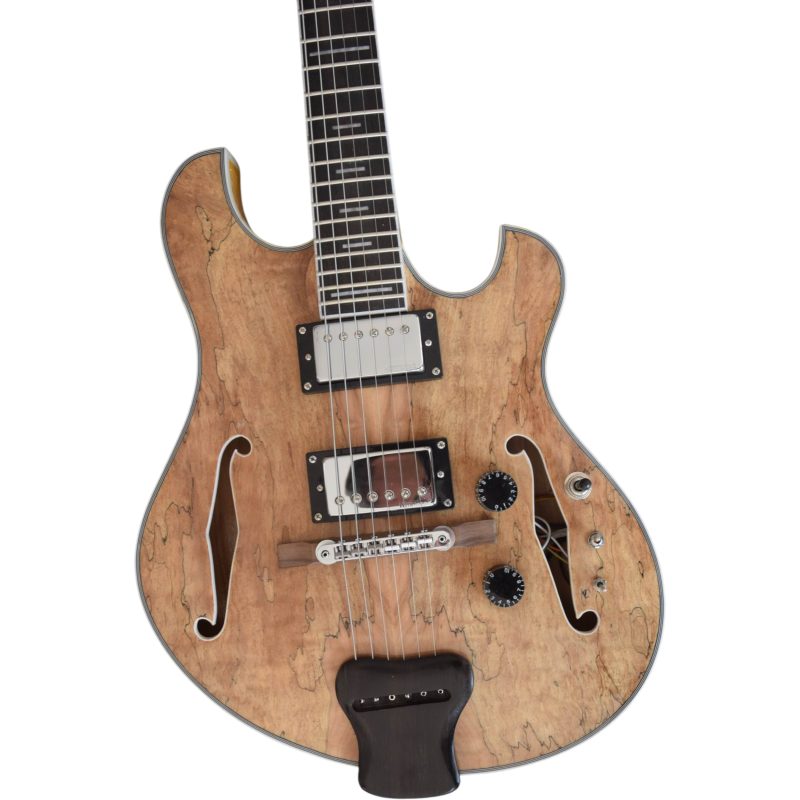
The 2026 PRS DGT Semi-Hollow is a useful current example. After limited runs, PRS made it part of the Core lineup, describing a warmer top end, a slightly leaner low end, and more controllable feedback compared with the solidbody version. This illustrates why semi-hollow guitars continue to appeal to players who want an expressive, resonant response without moving fully into traditional hollowbody territory.
As a practical starting point:
- Solidbody: Strong sustain, broad versatility, and better resistance to unwanted feedback
- Semi-hollow: More acoustic interaction and warmth while remaining stage-friendly
- Hollowbody: Open, resonant character favored for jazz, roots, rockabilly, and selected alternative styles
Wood species matters, but construction, dimensions, hardware, pickups, and setup work as a system. Avoid choosing a body wood from an isolated tone chart. Tell the builder the sound and response you want, then evaluate the complete specification.
6. Hardware That Stays Stable
The bridge, tuners, nut, fretwork, and setup are not glamorous search terms, but they often separate a dependable guitar from a frustrating one.
Look for:
- A properly cut nut
- Smooth, correctly seated frets
- Stable tuners with suitable gear ratios
- A bridge matched to your playing style
- Correct neck relief and intonation
- Clean electronics and dependable output connections
- Strap buttons or locking systems appropriate for stage use
A fixed bridge is usually simple and stable. A traditional tremolo can add expressive movement with moderate complexity. A double-locking system can handle aggressive pitch effects when correctly set up, although string changes and tuning adjustments take more time.
The “best” bridge is therefore not universal. A player who never uses a tremolo may gain nothing from the added weight and maintenance. A player whose music depends on deep dives and pull-ups may consider it essential.
7. A Design That Feels Personal
Fender is celebrating both its 80th anniversary and 75 years of the Telecaster in 2026, proving that classic electric-guitar shapes remain culturally powerful. At the same time, headless guitars, extended-range models, illuminated instruments, acrylic bodies, unusual finishes, and artist-driven designs continue to attract players seeking something distinctive.
The strongest custom designs do not add decoration at random. They create a coherent identity through:
- Body shape and proportions
- Finish color and transparency
- Figured or natural wood presentation
- Binding and purfling
- Hardware color
- Inlays and engraving
- Control layout
- Headstock or headless architecture
- Stage-oriented lighting features
For performers who want an unmistakable stage presence, our LED Illuminated Series offers a more dramatic direction. For traditionalists, a carefully chosen burst, metallic finish, natural top, or restrained inlay can make a guitar personal without making it visually excessive.
The point is not to chase every 2026 guitar trend. It is to choose a design you will still be proud to play after the trend changes.
How to Choose the Best Electric Guitar for You
Before comparing brands or prices, write down your actual requirements:
- Music: What genres and tunings do you use most?
- Feel: Which neck and body dimensions are already comfortable?
- Sound: Which two or three core tones must the guitar produce?
- Use: Is it primarily for home, studio, touring, collecting, or multiple roles?
- Hardware: Do you need a fixed bridge, traditional tremolo, or double-locking system?
- Appearance: Do you want understated elegance, vintage character, or a dramatic stage instrument?
- Budget: Which specifications improve performance, and which are mainly decorative?
This process prevents a common purchasing mistake: choosing a guitar because it is popular, then spending additional money replacing pickups, hardware, or other parts to make it suitable.
Why a Custom Electric Guitar Belongs on Your 2026 Shortlist
Factory guitars offer convenience and consistency, but fixed model specifications inevitably involve compromises. You may find the right body with the wrong neck, the ideal pickups with an unwanted bridge, or a beautiful finish on a guitar that does not fit your hands.
A custom build lets those decisions begin with the player. At Custom Guitar Atelier, clients can explore traditional six-string instruments, extended-range configurations, headless designs, specialty finishes, and highly personal visual concepts. The goal is not customization for its own sake—it is to create an instrument whose features support the way you play.
If you are comparing the best electric guitars of 2026, browse our custom electric guitar collection for inspiration. When you are ready, contact our Custom Build Team to discuss your preferred body style, neck, scale length, electronics, hardware, and finish.
Frequently Asked Questions
What is the best electric guitar in 2026?
The best electric guitar is the one that matches your hands, tuning, musical style, performance needs, and budget. Build quality, fretwork, comfort, tuning stability, and suitable electronics matter more than a brand name alone.
Are custom electric guitars worth it?
A custom electric guitar can be worth it for players who already understand their preferences or cannot find the right combination of neck, scale length, pickups, hardware, and appearance in a factory model. The value comes from reducing compromises and unnecessary upgrades.
Should I buy a six-, seven-, or eight-string guitar?
Choose six strings for maximum familiarity and versatility. A seven-string adds low range while preserving much of standard technique. Eight-string and longer-range instruments suit players whose arrangements, tunings, or techniques genuinely use the expanded register.
Are headless guitars better than traditional guitars?
Neither format is universally better. Headless guitars can be compact and well balanced, while traditional guitars offer familiar tuning hardware and classic styling. Construction quality and the player’s preferences matter more than the presence or absence of a headstock.
What specifications should I provide to a custom guitar builder?
At minimum, discuss body style, number of strings, scale length, neck profile, nut width, fretboard radius, frets, pickups, controls, bridge, tuners, finish, hardware color, and intended tuning. A good consultation can help refine details you have not decided.
Final Thoughts
The electric-guitar market in 2026 respects its history while moving toward greater comfort, broader ranges, more flexible electronics, and deeper personalization. Current releases show that vintage forms, semi-hollow construction, ergonomic extended-range instruments, stainless-steel frets, and digital integration can all coexist.
Do not choose your next guitar by specification count alone. Choose the instrument whose design serves your music—and, when no factory model brings all the right elements together, consider building one around you.
Ready to create your own? Explore Custom Guitar Atelier or speak with our Custom Build Team at 1 (800) 988-8340or [email protected].