
Artist Spotlight & Signature Prototypes, Boutique Electronics & Tone Shaping, Custom Guitars, International Shipping & Global Logistics, Style, The Bespoke Build Process (E-E-A-T), Tonewood & Material Science
Guitar Scale Length and Neck Profile Guide: How to Build a More Comfortable Custom Guitar
Jul
A beautiful finish may attract your attention first, but the measurements of a guitar determine whether you will enjoy playing it for five minutes or five hours. Scale length, neck profile, nut width, fingerboard radius, fret size, and final setup all influence how far your fingers must reach, how much pressure the strings require, and how easily the instrument responds.
These details become especially important if you have smaller hands, limited mobility, an old hand injury, or a playing style that depends on low action and effortless bends. They also matter to experienced musicians who simply know that a standard factory neck does not feel right.
This guide explains the most important comfort-related specifications to consider before ordering a custom-made electric guitar.
What Is Guitar Scale Length?
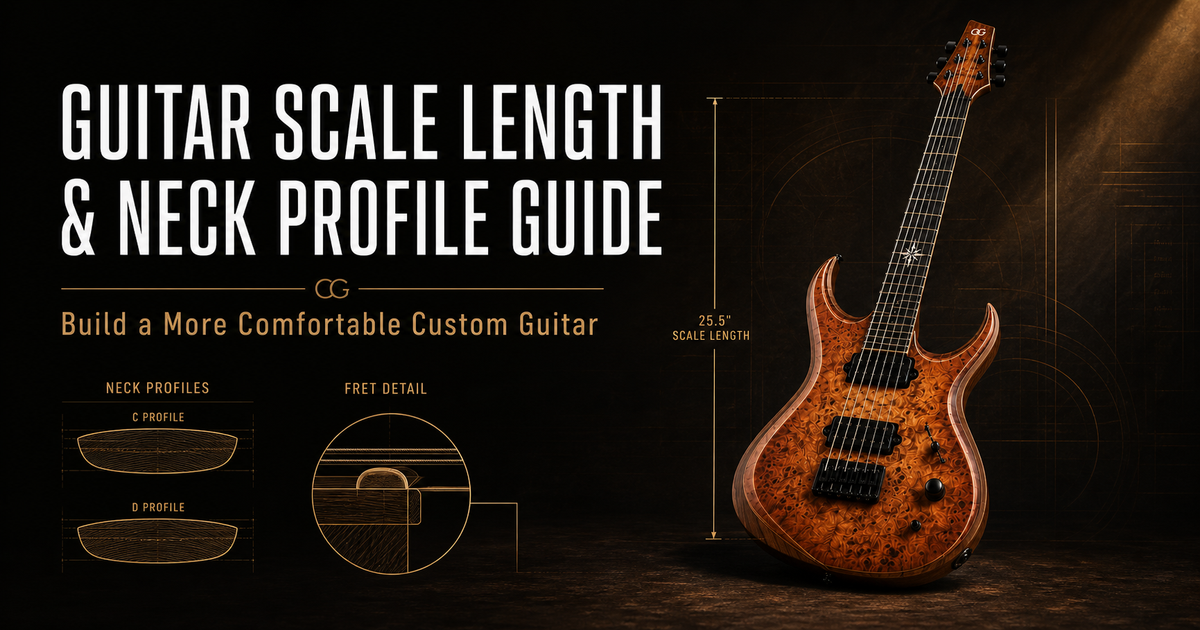
Scale length is the vibrating length of the string, measured from the nut to the bridge saddle. It affects string tension, fret spacing, response, and the overall feel of the instrument.
Two of the most common electric-guitar scale lengths are:
- 24.75 inches (approximately 629 mm): commonly described as a shorter scale
- 25.5 inches (approximately 648 mm): commonly described as a longer scale
Some custom guitars use a measurement close to 24.7 inches, while other designs may use 25 inches, baritone scales, or multiscale layouts. There is no universally superior scale length. The best choice depends on your hands, tuning, string gauge, technique, and preferred response.
24.75 vs. 25.5 Scale Length: What Changes?
| Playing factor | 24.75-inch scale | 25.5-inch scale |
|---|---|---|
| String feel at the same tuning and gauge | Softer and more flexible | Firmer and tighter |
| Fret spacing | Slightly closer | Slightly wider |
| String bending | Usually requires less effort | Usually feels more resistant |
| Lower tunings | May require heavier strings | Often retains tension more easily |
| Picking response | Softer, more elastic feel | Tighter, more immediate feel |
| Hand reach | Can feel easier for some players | Can feel more spacious for larger hands |
A shorter scale can reduce the distance between frets and lower string tension when the tuning and string gauge remain the same. This can make chord stretches, vibrato, and bends feel easier. A longer scale generally provides a firmer response and may help maintain definition with lower tunings.
However, scale length is only one part of comfort. A short-scale guitar with a thick neck or wide nut may feel less comfortable than a 25.5-inch guitar with a carefully shaped slim neck.
Is a Short-Scale Guitar Better for Small Hands?
It can be, but the answer depends on more than hand size.
A shorter scale may help by reducing fret spacing and string tension. Players with smaller hands often notice the difference when forming wide chords near the first five frets. Players with limited hand mobility may also appreciate the reduced reach.
Before choosing a short scale, consider these specifications together:
- Scale length
- Neck depth at the first and twelfth frets
- Nut width
- String spacing
- Shoulder shape of the neck
- Fingerboard radius
- Fret height
- String gauge
- Final action and neck relief
If comfort is your main priority, describe the exact difficulty you experience. For example, tell the builder whether wide chord stretches, thumb placement, string pressure, or upper-fret access causes the most discomfort. Specific information is more useful than simply requesting a “thin neck.”
Understanding Guitar Neck Profiles
The neck profile is the shape of the back of the neck. It affects how the neck fills your palm and where your thumb naturally rests.
C-Shape Neck
A C-shape has a smooth, rounded curve with moderate shoulders. It is one of the most versatile profiles because it works with many hand positions and playing styles.
A slim C-shape may suit players who prefer a less substantial neck, faster position changes, or a more relaxed grip. A deeper C-shape provides more palm support without feeling as square as some D or U profiles.
D-Shape Neck
A D-shape usually has a flatter center and more noticeable shoulders. Some players enjoy the stable feel, especially when keeping the thumb behind the neck. Others may find the shoulders too substantial.
U-Shape Neck
A U-shape is generally fuller, with more depth and prominent shoulders. It can feel supportive to players who like a substantial vintage-style neck, but it is rarely the first choice for someone specifically requesting a less girthy profile.
V-Shape Neck
A V-shape has a more defined ridge along the center. Soft V profiles can feel comfortable for thumb-over playing, while harder V profiles produce a more pronounced shape in the palm.
Asymmetrical Neck
An asymmetrical profile uses different contours on the bass and treble sides. When designed around a player’s grip, it can support the thumb while reducing material where the fingers wrap around the neck.
The profile name alone is not enough to guarantee comfort. Two slim C necks can feel very different if their depth, width, and shoulder shape are not the same. Whenever possible, provide measurements from a guitar you already find comfortable.
Neck Measurements Worth Recording
If you have a favorite instrument, record these measurements and include them with your custom-build request:
- Scale length
- Nut width
- Neck depth at the first fret
- Neck depth at the twelfth fret
- Fingerboard radius
- String spacing at the nut and bridge
- Fret width and height
- String gauge and tuning
- Action at the twelfth fret
Clear photographs of the neck from the side and behind can also help communicate the profile. A contour gauge is useful for capturing the exact shape of an existing neck, but accurate depth and width measurements already provide valuable guidance.
How Fingerboard Radius Changes the Feel
Fingerboard radius describes the curvature across the fretboard.
- Smaller or rounder radius: often associated with comfortable chord work
- Larger or flatter radius: often preferred for bends, low action, and modern lead playing
- Compound radius: becomes flatter toward the higher frets, combining a comfortable lower register with more room for upper-fret bends
Radius should be chosen with your playing style and setup goals in mind. A player seeking very low action and wide bends may prefer a flatter or compound radius, while a rhythm player may enjoy a more rounded board.
Choosing the Right Fret Size
Fret size influences how much contact your fingers make with the fingerboard and how the guitar responds to pressure.
Small or Vintage-Style Frets
Smaller frets can provide a direct, traditional feel. Because the strings sit closer to the fingerboard, some players feel more wood beneath their fingers. Precise bends may require slightly more effort.
Medium-Jumbo Frets
Medium-jumbo frets offer a balanced feel for chords, bends, rhythm playing, and lead work. They are a versatile choice for players who do not want either extreme.
Jumbo or Tall Frets
Tall frets reduce fingerboard contact and can make bends and vibrato feel easier. They may also suit players who want to fret notes using a lighter touch. However, excessive pressure can pull notes sharp, so a relaxed technique is important.
Fret material also affects longevity and feel. Nickel-silver is traditional and serviceable, while stainless-steel frets are valued for durability and a smooth bending surface.
Can Tall Frets Create Low Action Without Buzzing?
Fret height alone does not determine how low the action can go. Consistent fret leveling is more important.
A reliable low-action setup depends on:
- Level, evenly crowned frets
- Correct neck relief
- Accurately cut nut slots
- Proper bridge and saddle adjustment
- Stable neck construction
- Suitable string gauge
- The player’s picking strength and tuning
Aggressive players normally require more clearance than light-touch players. Climate also matters: seasonal humidity and temperature changes can affect neck relief after delivery, especially when an instrument travels between regions such as the United States, Canada, and Australia.
For that reason, the best request is not simply “the lowest possible action.” Tell the builder your playing style, tuning, string gauge, and acceptable amount of acoustic string noise. That information supports a more practical setup.
Do These Choices Apply to Bass and Acoustic Guitar?
Yes, although the priorities change.
For a custom electric bass, scale length strongly affects string tension and the feel of the lower strings. Short-scale basses may feel more compact, while 34- and 35-inch designs can provide a firmer response, particularly on extended-range instruments.
For a custom acoustic guitar, scale length, neck width, string spacing, and body size work together. Fingerstyle players may want more string spacing, while players seeking easy chord transitions may prefer a narrower, slimmer neck.
Players building their own instrument can also use these measurements when choosing unfinished custom guitar bodies and necks. Confirm neck-pocket dimensions, scale compatibility, bridge position, and fret layout before assembly.
A Practical Comfort Checklist for Your Custom Guitar
Before approving your build specifications, answer the following questions:
- What guitar currently feels most comfortable in my hands?
- Do I prefer softer or firmer string tension?
- Which chord shapes or techniques feel difficult?
- Do I wrap my thumb over the neck or keep it behind the fretboard?
- Do I prefer a slim neck or more palm support?
- What tuning and string gauge will I use?
- How hard do I pick?
- Do I prioritize low action, wide bends, chord comfort, or tuning stability?
- Do I need right-handed or left-handed construction?
- Can I provide measurements or a neck-profile reference?
The more precisely you describe your playing needs, the easier it is to design an instrument that feels natural from the first session.
Frequently Asked Questions
Is 24.75 inches easier to play than 25.5 inches?
At the same tuning and string gauge, a 24.75-inch scale generally feels softer and has slightly closer fret spacing. Many players find it easier for bends and stretches, but neck shape, setup, and string gauge are equally important.
What neck profile is best for small hands?
A slim C-shape is a common starting point because it has a rounded contour without excessive shoulders. The best result depends on actual neck depth, nut width, and the player’s grip.
What guitar specifications help a player with a hand injury?
A shorter scale, slim neck, comfortable nut width, lighter strings, tall level frets, and an appropriate setup may reduce effort for some players. Individual injuries vary, so consult a qualified healthcare professional and test instruments when possible before finalizing the build.
Are jumbo frets good for low action?
Jumbo frets can make fretting and bending feel easier, but low action depends primarily on accurate fret leveling, neck relief, nut work, and bridge adjustment.
Can a custom guitar use a nonstandard scale length?
Many custom designs can use a different scale length, but the fret layout, neck, bridge position, pickups, and overall template must be engineered as a complete system. Confirm feasibility with the production team before ordering.
Build a Guitar Around Your Hands—not the Factory Standard
Comfort is not a minor upgrade. It affects practice time, accuracy, confidence, and the connection you develop with an instrument.
At Custom Guitar Atelier, customers can discuss scale length, neck profile, fingerboard material, fret size, hardware, pickups, finish, inlays, and other available specifications with our team. If you already own a guitar that feels right, send us its measurements and clear reference photographs. If standard instruments feel uncomfortable, explain where and why they create difficulty.
Explore our custom-made guitars or visit Custom Guitar Atelier to begin planning an instrument shaped around your sound, style, and playing needs.