
Artist Spotlight & Signature Prototypes, Boutique Electronics & Tone Shaping, Custom Guitar Atelier Design, Custom Guitars, Customer Reviews, International Shipping & Global Logistics, The Bespoke Build Process (E-E-A-T), Tonewood & Material Science
Tips on How to Maintain Your Guitar: Essential Care for Electric, Bass & Acoustic Instruments
Nov
A custom-crafted guitar or bass is built to become a lifelong musical partner, yet even the finest tonewoods and precision hardware rely on consistent care to perform at their peak. Whether you play a multi-string custom electric guitar, an extended-range bass, a headless multiscale build, or a solid-top acoustic, establishing a practical maintenance routine keeps your action comfortable, prevents premature fret wear, and protects your finish for decades.
At Custom Guitar Atelier, every instrument completes a full setup and our CGA 50-Point Quality Check before leaving our workshop. Here is our complete lutherie care guide to keeping your instrument in stage-ready condition year-round.
1. Wipe Down Strings, Hardware & Finishes After Every Session
Natural skin oils, perspiration, and airborne dust are the primary causes of string corrosion, tarnished bridges, and hazy finishes.
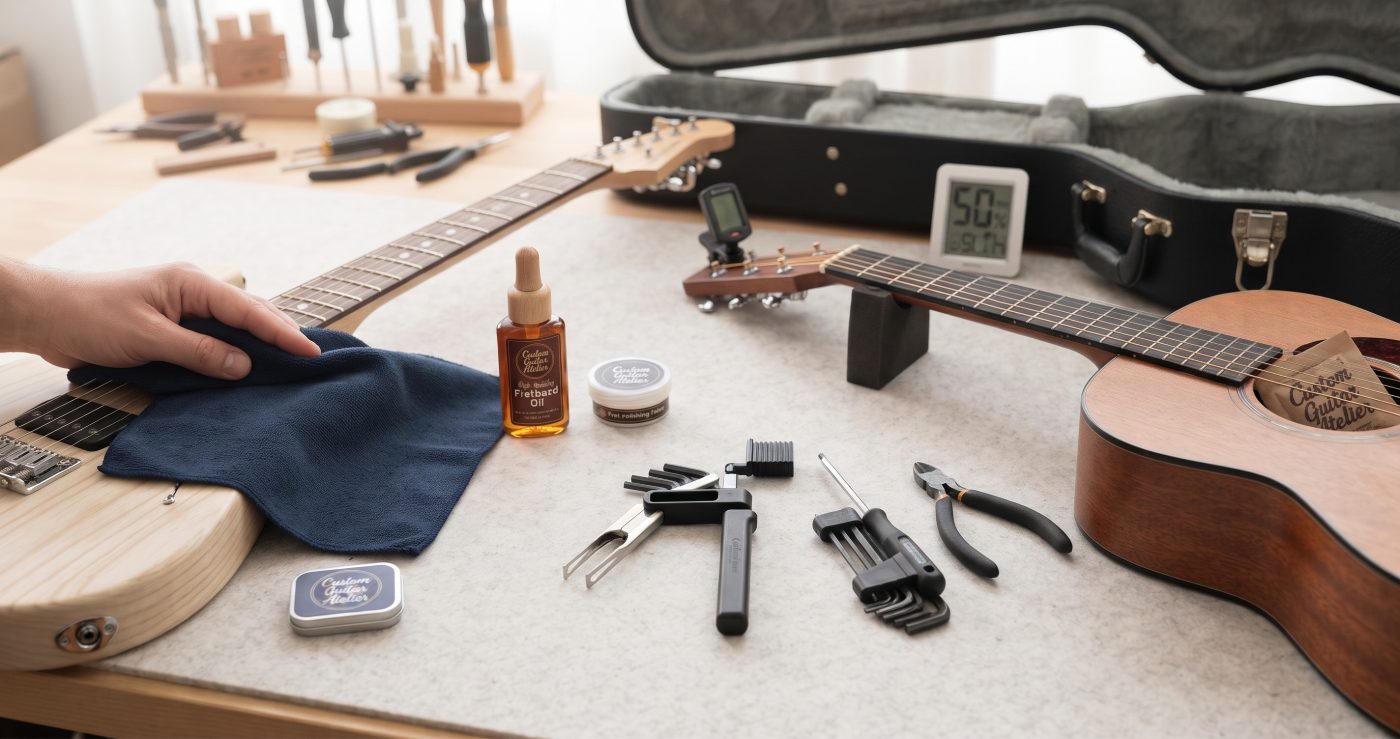
- Clean Each String Individually: Keep a dedicated, lint-free microfiber cloth inside your hard case. After every practice session or live show, pinch the cloth around each string and slide it from the nut to the bridge—cleaning underneath the strings where corrosion starts fastest.
- Wipe Down the Body, Neck & Bridge: Gently buff away fingerprints from the top, back of the neck, pickup covers, and bridge saddles. Removing sweat immediately prevents pitting on chrome, gold, or black hardware.
- Wash Your Hands Before Playing: Clean, dry hands dramatically extend string life and reduce buildup along the fret wire.
2. Maintain Your Fretboard Properly During String Changes
Every string change is the best opportunity to inspect and refresh your fingerboard—provided you use the right method for your specific wood type:
- Unfinished Rosewood, Ebony & Pau Ferro Fretboards: Wipe away fingerboard residue with a dry microfiber cloth (or a soft, dry toothbrush along the edge of the frets). Once or twice a year, apply a minimal drop of guitar-safe mineral-based fretboard conditioner, let it absorb briefly, and buff completely dry. Never use raw lemon juice, cooking oils, or household wood polishes.
- Finished Maple Fretboards: Lacquered or satin-sealed maple fingerboards do not absorb oil. Simply wipe them clean with a slightly damp microfiber cloth followed immediately by a dry cloth.
- Fret Wire Care: Clean frets make bending smoother and improve intonation. Avoid abrasive steel wool near magnetic pickups—if you polish frets, always mask the fretboard and cover pickups completely so metal dust cannot cling to pickup magnets.
3. Protect Tonewoods With Stable Temperature & Humidity
Tonewoods such as Mahogany, Alder, Ash, Maple, Walnut, Rosewood, and Ebony naturally expand and contract as moisture levels fluctuate.
- Target Ideal Room Conditions: Store your instrument in a hardshell case when not in use, ideally in an environment maintained between 45% and 55% relative humidity and steady room temperature.
- Prevent Rapid Climate Shifts: Never store guitars directly beside heating vents, air conditioners, radiators, or sunny windows, and never leave an instrument inside a parked car. Sudden drops in humidity can cause sharp fret ends (fret sprout), back-bowed necks, or top cracks on acoustic instruments.
- Acoustic Guitar Humidification: During dry winter months or in heavily air-conditioned rooms, use an in-case soundhole humidifier to keep acoustic tops and braces stable.
4. Change Strings Regularly & Keep Setup Specs Consistent
Worn strings lose harmonic clarity, feel stiff under your fingers, and struggle to hold accurate pitch across the fretboard.
- Replace Strings on a Schedule: Frequent players should install fresh strings every 3 to 6 weeks, or immediately if strings look discolored, feel rough, or sound dull.
- Stay Consistent With String Gauges: Your guitar’s nut slots, truss rod relief, bridge height, and intonation are calibrated for a specific string gauge and tuning. Moving to significantly heavier or lighter strings changes neck tension and usually requires a fresh setup.
- Stretch New Strings Gently: After restringing, gently pull each string upward along the center of the fretboard and retune two or three times so tuning stabilizes quickly.
5. Perform Monthly Hardware & Electronics Checks
A two-minute inspection once a month catches minor loosening before it interrupts a rehearsal or performance:
- Tuning Machines & String Locks: Check that tuner mounting screws and hex bushings are snug (hand-tight only—never over-torque). On headless or locking-nut instruments, inspect locking screws for smooth threading.
- Strap Buttons & Output Jack: Confirm strap buttons are tight and consider strap locks for active stage movement. If an output jack nut loosens, hold the internal jack assembly steady from the cavity before tightening the external nut so internal wires do not twist.
- Pickup Height & Potentiometers: Keep pickup height balanced for even string volume, and use electronics-safe contact cleaner if a volume or tone pot ever develops light static.
Crafted for Longevity, Setup & Player Confidence
Continuing more than two decades of custom lutherie heritage since 2000 (formerly The Top Guitars), Custom Guitar Atelier (the musical instrument and custom guitar division of Everline General Merchandise LLC) builds custom instruments tailored to your exact specifications. Depending on your chosen model and configuration, builds can incorporate selected tonewoods alongside trusted hardware and electronics from Gotoh, Schaller, Wilkinson, EMG,Seymour Duncan, DiMarzio, Fishman Fluence, TV Jones, and MEC.
Every completed build undergoes final assembly, precision setup, and our CGA 50-Point Quality Check, accompanied by actual photographs and a professional demonstration video before shipment.
- Explore Custom Builds: Browse our Custom Electric Guitars, Custom Bass Guitars, and Custom Acoustic Guitars.
- Hear From Real Musicians: Read player stories and watch performance videos on our Customer Reviews page.
- Need Setup or Build Guidance? Contact our team anytime at
[email protected]or toll-free at 1 (800) 988-8340.