
Artist Spotlight & Signature Prototypes, Boutique Electronics & Tone Shaping, International Shipping & Global Logistics, The Bespoke Build Process (E-E-A-T), Tonewood & Material Science
The Ultimate Guide to Commissioning a Custom Guitar: Where to Start
Jun
Thinking about buying a custom guitar? Discover how to choose the right tonewoods, neck profiles, and hardware in this complete buyer’s guide from Custom Guitar Atelier.
Every serious guitarist reaches a point where off-the-rack instruments no longer cut it. You want a guitar that feels like a natural extension of your hands—a bespoke instrument crafted perfectly for your tone, playing style, and aesthetic vision.
But commissioning a custom build is a major investment of both time and money. If you are going to take the leap, you need to know exactly what to look for so you get a masterpiece, not a regret. Here is your definitive guide to designing your dream custom guitar.
1. Define Your Playing Profile First
Before you start looking at gorgeous exotic woods or custom inlay designs, strip the process back to the basics. Form must always follow function. Ask yourself these practical questions:
- What is your primary playing environment? A gigging musician needs rugged durability and reliable tuning stability, whereas a studio player might prioritize zero-hum electronics and perfect intonation across multiple alternate tunings.
- What is your tonal goal? Are you chasing a vintage ’60s blues chime, aggressive modern metal tightness, or a versatile workhorse that can do both?
- What holds you back on your current guitar? Identify your pain points. Whether it is neck dive, a cramped fretboard, or muddy pickups, your custom build should solve these exact issues.
2. Choosing the Right Body Shape
The body shape is the foundation of your build. It dictates the overall look, but more importantly, it determines the guitar’s ergonomics, weight, and acoustic balance.
| Body Type | Tone & Resonance Profile | Best Suited For |
|---|---|---|
| Solidbody | Sustain-heavy, punchy, highly feedback-resistant. | Rock, Metal, Country, Versatile gigging. |
| Semi-Hollow | Warm, airy, with a pronounced and musical mid-range. | Blues, Indie, Classic Rock. |
| Hollowbody | Deep, acoustic-like resonance and volume. | Jazz, Rockabilly, rich clean tones. |
Pro Tip: Do not forget about upper-fret access. If you frequently play past the 15th fret, opt for a double-cutaway or request a heavily contoured, sculpted heel joint.
3. Tonewoods: Balancing Weight and Tone
The wood you choose will subtly impact the resonance, dictate the weight, and establish the visual character of the guitar. At Custom Guitar Atelier, we source only the finest seasoned timbers.
Guitar Kit World
- Alder & Ash: The classic bolt-on choices. Alder offers a balanced, punchy midrange, while Swamp Ash brings bright highs and a scooped mid (plus a stunning grain for translucent finishes).
- Mahogany: The king of set-neck guitars. It delivers massive sustain, warmth, and a thick low-end, though it requires consideration for weight.
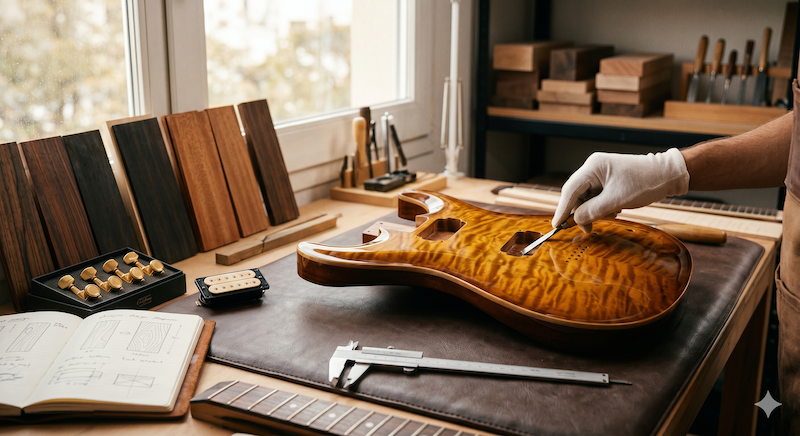
- Exotic Tops: Adding a drop-top of Quilted Maple, Burl, or Koa won’t drastically change the core tone of a solid body, but it will turn your guitar into a unique, one-of-a-kind piece of art.
4. The Neck: Where the Magic Happens
The neck is where your hand lives. An uncomfortable neck profile will ruin an otherwise perfect guitar, no matter how good it sounds.
Neck Profile
- C-Shape: The most common and comfortable for standard playing and thumb-over chords.
- U-Shape / “Chunky”: Ideal for players with larger hands or those who want maximum wood resonance.
- Thin D / Flat-Oval: Built for speed. Perfect for shredders, metal, and highly technical players.
Scale Length
- Shorter Scale (e.g., 24.75″): Less string tension, making wide bends easier and yielding a slightly warmer, thicker tone.
- Longer Scale (e.g., 25.5″): Tighter string tension, offering more snap, clarity, and strict low-end definition.
5. Pickups and Hardware
Pickups are the voice of your electric guitar.
- Single-Coils: Brilliant, articulate, and dynamic. Perfect for clean chimes and edge-of-breakup grit.Guitar Kit World
- Humbuckers: Thick, powerful, and noise-canceling. The absolute go-to for high-gain rock and smooth, fat jazz tones.Ploutone
- P90s: The ultimate middle ground, offering the raw bite of a single-coil with the muscular output of a humbucker.
Pair your electronics with uncompromising hardware. Locking tuners, a precision-machined bridge, and a perfectly cut bone or graphite nut are non-negotiable for professional tuning stability.
Ready to Build Your Dream Guitar?
Buying a custom guitar isn’t just a retail transaction; it is a collaboration between the player and the luthier. At Custom Guitar Atelier, we take the time to understand your unique playing style and translate it into a masterfully crafted instrument that will inspire you for a lifetime.
Guitar Kit World
Stop compromising with off-the-rack guitars. Head over to customguitaratelier.com today to start your free design consultation and let’s bring your dream instrument to life.