
Artist Spotlight & Signature Prototypes, Boutique Electronics & Tone Shaping, Custom Guitars, Customer Reviews, International Shipping & Global Logistics, Style, The Bespoke Build Process (E-E-A-T), Tonewood & Material Science
How to Choose a Custom Guitar: Electric, Bass, Acoustic or DIY?
Jul
There is a point in every player’s journey when an off-the-shelf instrument no longer feels quite right. Perhaps the neck is too thick, the pickups do not match your sound, the scale length feels uncomfortable or every available finish looks like something you have already seen.
A custom guitar gives you another option: choose an instrument around your music, your hands and your visual style.
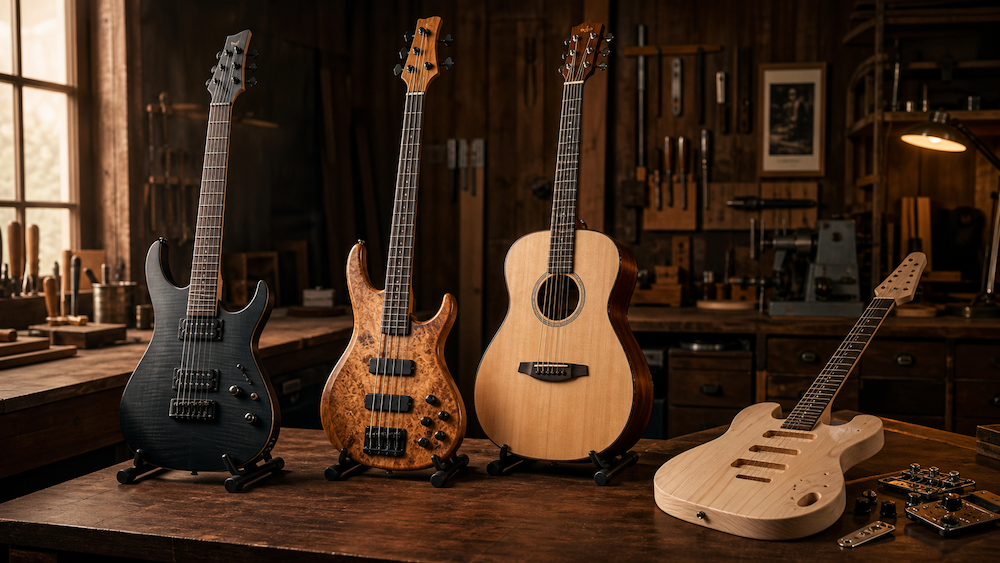
That does not mean adding every possible upgrade. A successful custom build is a focused instrument in which the body, neck, electronics, hardware and finish work together. Whether you are shopping for a custom electric guitar, custom electric bass, custom acoustic guitar or a DIY guitar kit or unfinished guitar, the best place to begin is with a clear idea of how you want the instrument to feel and sound.
This guide explains the main choices and helps players in the USA, Canada, Australia and beyond plan a build with confidence.
Start With the Music You Want to Make
Before choosing woods, colors or hardware, answer four practical questions:
- What styles of music do you play most often?
- What do you like and dislike about your current instrument?
- Will this guitar be used mainly for recording, live performance, practice or collecting?
- Do you want a completed instrument or a hands-on DIY project?
Your answers turn a long list of attractive options into a useful specification. A touring guitarist may prioritize comfort, tuning stability and versatile electronics. A studio player may want a distinctive pickup combination. A bassist may focus on scale length and string spacing. An acoustic player may care most about body size, projection and playing response.
Which Type of Custom Instrument Is Right for You?
Custom Electric Guitar
A custom electric guitar is the most flexible choice for players who want a particular combination of shape, neck feel, pickup layout, bridge and finish.
Consider a custom electric guitar if you want:
- A body shape or finish that feels personal
- Left- or right-handed construction
- Six, seven, eight or another extended-range string configuration
- A specific pickup layout for clean, vintage, high-gain or versatile tones
- A neck profile, scale length or fretboard radius selected for your playing style
- Personalized details such as a headstock logo or branding
The most important decisions are usually the neck and electronics. The neck affects every note you play, while the pickups and wiring determine how the guitar interacts with your amplifier and effects.
If you move between several genres, versatility may be more valuable than extreme specialization. A carefully chosen pickup combination and practical switching layout can cover more ground without making the controls confusing.
Custom Electric Bass
A custom electric bass should feel balanced, comfortable and responsive across the entire neck. Small specification changes can make a major difference during a long rehearsal or performance.
When planning a bass, think about:
- Number of strings
- Scale length
- Neck width and profile
- String spacing at the bridge
- Pickup type and placement
- Passive or active electronics
- Overall weight and balance
A four-string bass can be direct and familiar. Five- and six-string instruments extend the available range but usually change neck width and string spacing. Longer scales may create a firmer feel, while shorter scales can be easier to reach and may produce a different response.
Your ideal specification depends on technique. Fingerstyle, pick playing, slapping, tapping and chordal work do not always benefit from the same spacing or setup. Choose the instrument around the way you actually play rather than the most impressive feature list.
Custom Acoustic Guitar
A custom acoustic guitar is shaped by the relationship between body design, materials and playing style. Because the sound is produced acoustically, construction choices can influence volume, balance, warmth, clarity and projection.
Important questions include:
- Do you mainly strum, fingerpick or use both techniques?
- Would you prefer a compact, comfortable body or a larger soundbox?
- Do you need a cutaway for upper-fret access?
- Will you perform amplified?
- What neck shape and nut width feel natural in your hands?
A player who performs solo may prefer a different tonal balance from someone whose guitar sits inside a full band mix. Fingerstyle players often value definition and response, while strong strummers may prioritize headroom and projection. Neither choice is automatically better; the right guitar supports the role it needs to fill.
DIY Guitar Kit or Unfinished Custom Guitar
A DIY or unfinished custom guitar is ideal for players who want to take part in the finishing, assembly or personalization process.
This route may suit you if you want to:
- Apply your own stain, paint, artwork or clear coat
- Learn more about guitar construction and setup
- Install or experiment with your preferred hardware and electronics
- Create a personal workshop project
- Build a unique instrument with more hands-on involvement
Before ordering, carefully review the individual product description to understand what is included. “DIY guitar kit” and “unfinished guitar” can describe different levels of completion. Confirm which parts, routing, drilling, hardware and electronics are supplied for the exact product you choose.
A DIY project also requires patience. Finishing and setup are skills of their own, and rushing the preparation stages can affect the final appearance and playability. If this is your first build, choose a manageable design and allow time to learn.
The Seven Specifications That Matter Most
1. Body Shape and Comfort
Appearance matters, but the guitar also needs to work when you are seated, standing or playing for several hours. Think about forearm contour, upper-fret access, strap balance and overall dimensions. A visually dramatic shape is most successful when it remains comfortable and stable.
2. Neck Profile and Dimensions
The neck is the instrument’s main point of contact. Its profile, width, thickness, scale length and fretboard radius all influence feel.
Rather than requesting a neck that is simply “fast,” describe a guitar you already enjoy playing. Useful references include whether you prefer a slim or substantial carve, a flatter or more curved fretboard and narrow or generous string spacing.
3. Scale Length
Scale length affects reach, string tension and response. With the same string gauge and tuning, a longer scale generally feels firmer and a shorter scale feels looser. Extended-range and lower-tuned players should consider this choice carefully because clarity and tension become increasingly important.
4. Pickups and Electronics
Choose electronics for sounds you will actually use. Single-coil-style pickups are often associated with clarity and articulation, while humbucker-style designs are often selected for a fuller sound and noise reduction. Other formats can offer different textures, and wiring options can expand the available tones.
More controls are not always better. A simple, intuitive layout is valuable on stage. If you want multiple switching options, make sure each one has a clear musical purpose.
5. Bridge and Tuning Hardware
Your bridge should match your playing style. A fixed bridge offers simplicity and stability. A tremolo system allows pitch effects but adds setup considerations. Bass bridges affect spacing and adjustment, while acoustic bridge design is part of the instrument’s overall construction.
Hardware color is a visual choice, but function comes first. Reliable tuners, appropriate components and a good setup help the instrument stay consistent.
6. Finish and Personal Details
This is where a custom build becomes unmistakably yours. You might choose a classic solid color, transparent finish, burst, natural appearance or more expressive artwork. Personalized headstock graphics and logos can add identity when they are planned as part of the complete design.
Remember that screens display colors differently. Use reference images to communicate the direction you want, but allow for natural variation in wood figure and finished color.
7. Left-Handed or Extended-Range Construction
Custom ordering gives left-handed players and extended-range musicians access to options that may be difficult to find in regular stores. Confirm orientation, string count, tuning, scale length and hardware requirements at the beginning of the process so every part of the specification supports the final design.
Ordering From the USA, Canada or Australia
Custom Guitar Atelier serves musicians internationally. Every instrument is made to order, so it is important to plan for both production and delivery rather than comparing the process with buying a ready-made guitar from a local warehouse.
Production and Worldwide Delivery
The current estimated production time is 60–90 working days. After completion, worldwide shipping is estimated at 15–30 working days. Production and transit are separate stages, and timing can vary with customization, material availability, order volume, destination and customs processing.
Orders ship from the manufacturing facility in China. The current worldwide shipping fee is a flat US$150, and a tracking number is provided after dispatch. Check the shipping policy before ordering for the latest information.
For Buyers in the USA
US buyers should define their preferred measurements clearly, especially scale length, nut width and other dimensions. Review the total order price and check whether any import charges may apply to your shipment. Once dispatched, use the supplied tracking details and allow for possible customs processing.
For Buyers in Canada
Canadian players should consider their local climate as well as potential import taxes or customs fees. A guitar moving between different temperatures and humidity levels may need time to acclimate after delivery. Keep the unopened package in a stable indoor environment before making immediate setup changes, particularly during very cold or dry weather.
For Buyers in Australia
Australian buyers should also check possible local duties, taxes and import requirements before ordering. Because the instrument will travel internationally, monitor tracking and inspect the outer packaging when it arrives. Give the guitar time to adjust to its new environment before evaluating minor setup preferences.
Customers in all three countries are responsible for any duties, taxes or customs fees charged by local authorities. Requirements can change, so confirm current information with the relevant customs agency rather than relying on an old estimate.
A Simple Custom Guitar Order Checklist
Before placing an order, write down your choices in one clear document:
- Instrument type and body shape
- Right- or left-handed orientation
- Number of strings and intended tuning
- Scale length
- Neck profile and preferred dimensions
- Fretboard and fret preferences
- Pickup and control layout
- Bridge and hardware choices
- Finish, color and reference images
- Personalized logo or design details
- Delivery address and contact information
- Questions about anything not clearly listed on the product page
Review the specification slowly. It is much easier to correct a detail before production than after a made-to-order instrument is underway.
Common Mistakes to Avoid
Choosing Features Without a Musical Reason
An option can be attractive without being useful to you. Every major specification should support comfort, sound, reliability or design.
Focusing on Appearance Before Feel
A beautiful instrument still needs to be enjoyable to play. Decide on neck feel, scale length, balance and control placement before finalizing decorative details.
Assuming Every DIY Product Includes the Same Parts
Always check the exact listing. Confirm the included components and required tools before planning your project.
Forgetting Production, Shipping and Customs Time
A made-to-order guitar is not an overnight purchase. Plan around the complete timeline, particularly if the instrument is intended for a tour, recording session, birthday or holiday.
Sending Vague Instructions
Clear specifications and reference images reduce misunderstandings. Describe what you like about each reference rather than sending an image without explanation.
Build an Instrument Around Your Playing
The best custom guitar is not the one with the longest specification sheet. It is the one that makes you want to keep playing.
Start with the music you make. Choose the instrument category, neck, scale, electronics and hardware that support it. Then bring the design to life with a finish and personal details that feel like your own.
Explore Custom Guitar Atelier’s collections of custom electric guitars, custom electric basses, custom acoustic guitars and DIY or unfinished custom guitars. If you need help clarifying a specification, contact the team before placing your order.
Frequently Asked Questions
How long does a custom guitar take to build and ship?
Custom Guitar Atelier currently estimates 60–90 working days for production and 15–30 working days for worldwide shipping after the instrument is completed. These are separate stages, and complex customization, material availability, customs or carrier conditions can affect timing.
Does Custom Guitar Atelier ship to the USA, Canada and Australia?
Yes. The published shipping policy offers worldwide shipping, including the USA, Canada and Australia. The current flat shipping fee is US$150. Local duties, taxes or customs fees may also apply and are the customer’s responsibility.
Can I order a left-handed custom guitar or bass?
Custom Guitar Atelier advertises left- and right-handed custom options. Confirm the orientation and every related specification on the chosen product before ordering.
What is the difference between an unfinished guitar and a DIY guitar kit?
The terms can refer to different levels of completion. Some products may require finishing, assembly, hardware, electronics or setup work. Read the individual listing and confirm exactly what is included before ordering.
What should I choose first when designing a custom guitar?
Start with instrument type, playing style, scale length and neck feel. Then select pickups, bridge and controls for the sounds and techniques you use. Choose the finish and personalized details after the functional specification is clear.